
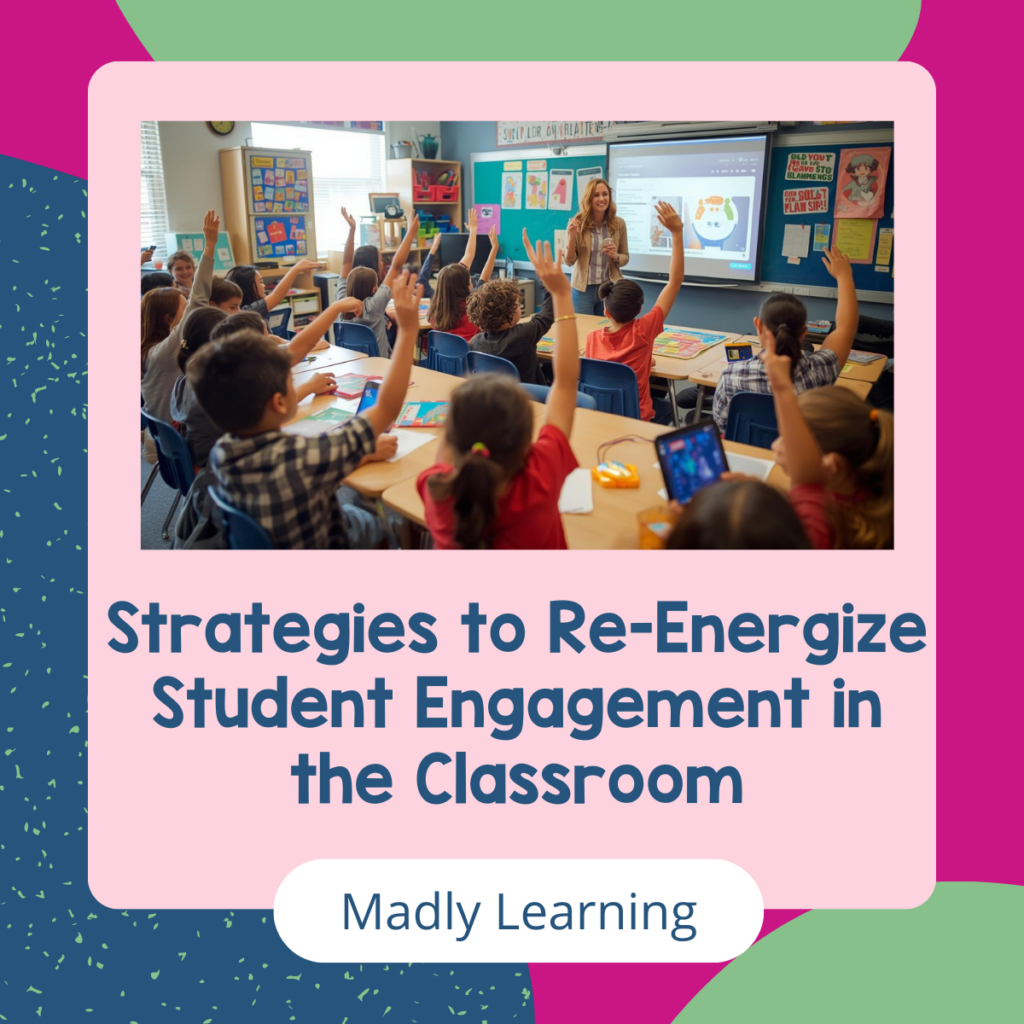
If you ask almost any teacher what they want more of, the answer is usually the same: student engagement in the classroom.
Not quiet compliance.
Not worksheets completed in silence.
Real engagement. The kind where students lean forward, ask questions, debate ideas, and lose track of time because they are genuinely interested in what they are learning.
But maintaining strong student engagement in the classroom throughout the school year is not always easy. Energy shifts as the months go on. Students become comfortable with routines. Attention spans shorten. Teachers feel the pressure of curriculum expectations and limited planning time.
The good news is that student engagement is not about entertainment. It is about creating meaningful learning experiences where students feel curious, capable, and connected.
Here are practical strategies teachers can use to increase student engagement in the classroom and support deeper learning.
Why Student Engagement in the Classroom Matters
Student engagement in the classroom is one of the strongest predictors of academic success. When students are actively involved in learning, they are more likely to retain information, participate in discussions, and develop critical thinking skills.
Engaged students are not simply completing tasks. They are asking questions, exploring ideas, and making connections between what they learn and the world around them.
Research consistently shows that classrooms focused on engagement experience improvements in:
- Student motivation
- Academic achievement
- Classroom participation
- Collaboration and communication skills
- Problem-solving ability
- Critical thinking development
For teachers, improving engagement also leads to a more positive classroom environment where students feel invested in their learning.
Start With Questions Instead of Answers
One of the most effective ways to increase student engagement in the classroom is to begin lessons with curiosity.
Instead of starting with information, start with a question.
For example:
- Why do some communities flood more easily than others?
- How would our lives change if electricity disappeared tomorrow?
- What patterns do you notice in these numbers?
When students explore questions first, they become more invested in the learning process.
This approach aligns with inquiry-based learning, which encourages students to investigate ideas, gather evidence, and construct understanding rather than simply receiving information.
Inquiry transforms passive instruction into active learning, which is one of the most powerful drivers of student motivation and classroom engagement.
Build Movement and Interaction Into Lessons
Students are not designed to sit still for long periods of time. Even older elementary students benefit from opportunities to move and interact.
Simple strategies can dramatically improve student engagement in the classroom, including:
- Turn-and-talk discussions
- Small group problem solving
- Gallery walks
- Hands-on investigations
- Interactive math tasks
These strategies promote collaborative learning where students explain their thinking, share ideas, and learn from their peers.
Research shows that collaborative classrooms lead to deeper understanding and improved knowledge retention because students are actively participating in the learning process.
Provide Meaningful Extensions for Early Finishers
One common challenge when trying to maintain classroom engagement is what to do with students who finish their work early.
Early finishers often lose motivation if they are given repetitive worksheets or busy work. Instead, they need meaningful extension opportunities that challenge their thinking and deepen learning.
I once discussed this topic in depth on my podcast.
In Episode 263: Innovative Teaching Tactics for Students Who Finish First, I explain the three types of early finishers teachers commonly see in their classrooms:
- The rushers
- The workhorses
- The intellectually gifted
Each group benefits from a slightly different strategy to stay challenged and engaged.
The episode also explores strategies like Genius Hour projects, passion-driven assignments, and deeper learning opportunities that emphasize quality rather than speed.
Watch the full episode here:
These strategies help transform early finishers into learners who remain curious and engaged throughout the lesson.
Provide Choice to Increase Student Motivation
Choice is one of the strongest drivers of student motivation.
When students feel ownership over their learning, they become more invested in completing tasks and participating in classroom discussions.
Choice might include:
- Selecting project formats
- Choosing independent or partner work
- Picking reading topics
- Selecting different problem-solving approaches
Providing structured choice encourages student-centered learning while maintaining clear learning goals.
This strategy can significantly improve student engagement in the classroom.
Connect Learning to Real-World Skills
Students engage more deeply when they understand the real-world purpose of what they are learning.
Connecting lessons to real-life skills helps students see the value of their work.
One example is introducing digital literacy and coding activities in the classroom.
Coding encourages creativity, computational thinking, and problem-solving while keeping students highly engaged.
If you are looking for an easy way to introduce coding, the Scratch Coding Boot Camp Activity Package provides a step-by-step curriculum designed for teachers with little or no coding experience.
The package includes:
- Introduction to Scratch lessons
- Coding vocabulary activities
- Sequencing and looping projects
- Conditional logic challenges
- Debugging activities
- Creative coding projects
These activities allow students to explore technology while developing problem-solving skills.
Learn more about the Scratch Coding Boot Camp Activity Package here:

Coding activities often lead to strong student engagement in the classroom because students are actively creating, experimenting, and learning through exploration.
Support Engagement Through Differentiated Instruction
Another major factor in student engagement is whether students feel capable of completing the task in front of them.
If work is too difficult, students become frustrated.
If work is too easy, students become bored.
Differentiated instruction allows teachers to adjust tasks and supports so that students experience the right level of challenge.
Examples include:
- Flexible small groups
- Scaffolded tasks with support
- Graphic organizers and visual aids
- Extension challenges for advanced learners
When students feel successful and appropriately challenged, engagement increases naturally.
More Strategies for Engaging Students
If you are looking for more ways to improve student engagement in the classroom, these resources may help.
Explore the Ignited Lessons Club for ready-to-use inquiry-based literacy, math, science, and social studies lessons designed for Canadian classrooms:
Frequently Asked Questions About Student Engagement in the Classroom
What are the best ways to increase student engagement in the classroom?
Effective strategies include inquiry-based learning, collaborative activities, project-based learning, differentiated instruction, and giving students meaningful choices in their learning tasks.
Why is student engagement important for learning?
Student engagement increases motivation, improves knowledge retention, and encourages critical thinking and problem-solving skills. Engaged students are more likely to participate actively and take ownership of their learning.
How can teachers keep early finishers engaged?
Teachers can provide extension activities such as coding projects, inquiry-based learning tasks, passion projects, and deeper problem-solving challenges instead of assigning repetitive worksheets.
What are examples of engaging classroom activities?
Hands-on investigations, collaborative discussions, coding projects, inquiry-based lessons, gallery walks, and project-based learning activities are all effective strategies for improving student engagement in the classroom.
Are you ready to re-energize your students?
When teachers prioritize curiosity, collaboration, meaningful challenges, and real-world connections, student engagement in the classroom becomes a natural outcome rather than something that has to be forced.