
Managing a classroom is one of the most rewarding parts of teaching, but it can also be one of the most challenging. Every group of students comes with its own dynamics, and what works one year might need adjusting the next. That’s why teachers are always seeking new classroom management ideas that strike a balance between structure and positivity. Good classroom management isn’t just about keeping the class quiet—it’s about building an environment where students feel respected, motivated, and eager to learn. The strategies below are practical, teacher-tested, and flexible enough to adapt to different grades and classroom styles.
10 Classroom Management Ideas
Here are ten classroom management ideas to help you set a positive tone and keep things running smoothly throughout the year.
1. Establish Clear Expectations Early
One of the most important steps in classroom management is setting the tone from the very beginning. Spend the first week going over routines and expectations in detail. Model what you want to see, practise it with your students, and provide consistent feedback. For example, don’t just tell students how to line up—show them, practise with them, and reinforce the routine until it becomes automatic. When students know exactly what is expected, it reduces confusion and prevents many behaviour issues before they start.
2. Use Positive Reinforcement
Instead of focusing on catching mistakes, make it your mission to catch students doing something right. Public praise, private recognition, or even a simple smile and nod can go a long way. Students respond positively when they feel seen and appreciated. Try phrases like, “I noticed you helped your partner without being asked—thank you.” This small shift in focus creates a classroom culture where positive behaviour is the norm, not the exception.
3. Create a Visual Schedule
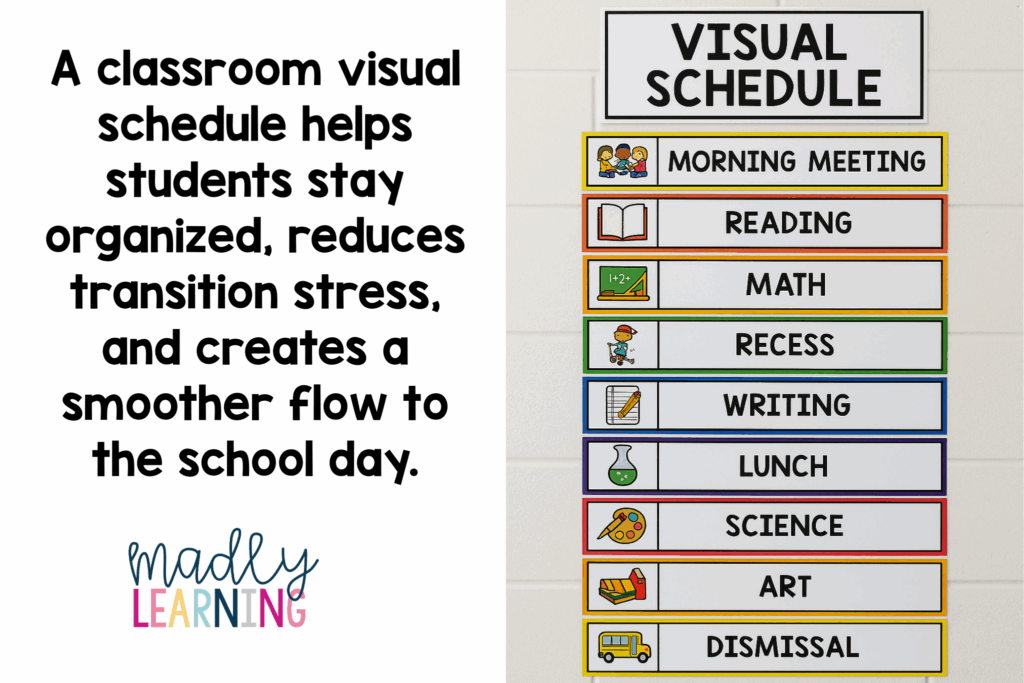
Children thrive on predictability. Posting a visual schedule at the front of the room gives students a sense of what’s coming next. This strategy works especially well for students who get anxious about transitions. You can use a simple whiteboard with magnets or digital slides projected on the board. By eliminating the mystery of “what’s next,” you help students focus on the task at hand and reduce off-task behaviour.
4. Incorporate Brain Breaks
Attention spans are limited, especially for younger learners. Adding short, structured breaks throughout the day gives students the chance to reset. These breaks can be active, like a two-minute dance party, or calming, like deep breathing or guided stretching. Brain breaks not only help students recharge, but they also improve productivity when it’s time to get back to work. Many teachers find that brain breaks save instructional time in the long run because students are more focused afterwards.
5. Try Flexible Seating Options
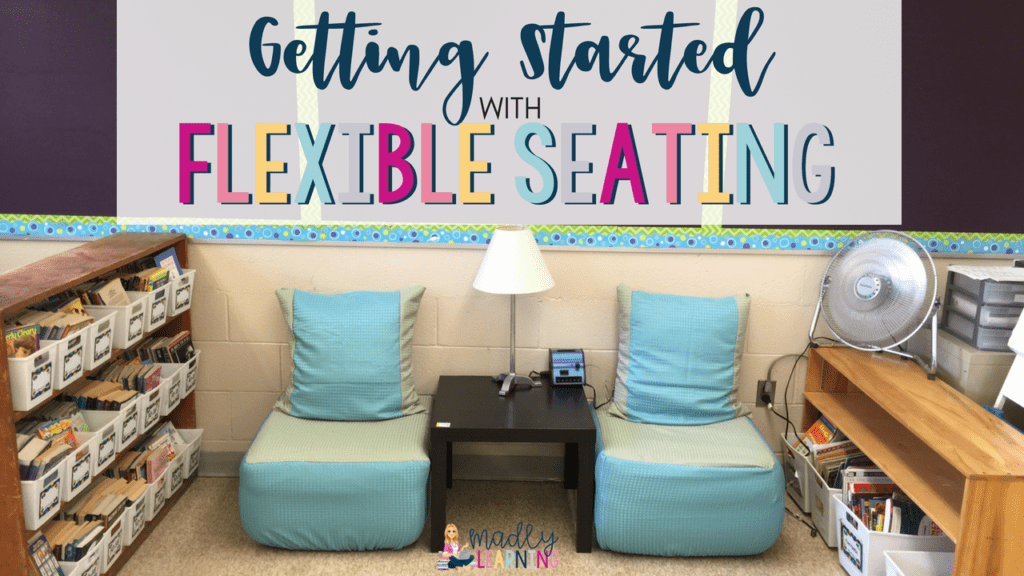
Every student learns differently, and where they sit can impact their focus. Flexible seating doesn’t mean a complete overhaul of your classroom—it can be as simple as offering clipboards for floor work, a standing desk, or carpet spots for independent reading. Giving students some choice in their learning environment increases engagement and helps reduce behaviour issues. When students feel comfortable, they’re more likely to stay on task.
6. Build Relationships First
Students are far more likely to follow classroom expectations when they feel respected and connected to their teacher. Take time to learn about their interests, families, and strengths. Greet students at the door, ask about their soccer game, or celebrate their art project. Building relationships creates trust, and trust leads to cooperation. A classroom built on mutual respect will always be easier to manage.
7. Implement a Classroom Reward System
Reward systems can be a fun and effective way to motivate students, but they don’t have to be elaborate. Consider group incentives, like earning marbles in a jar for a class party, or individual incentives, such as earning points for privileges. The key is consistency. When students see that positive actions are acknowledged, they are more motivated to repeat those behaviours. Just be sure the rewards emphasize effort, kindness, and growth rather than perfection.
8. Use Non-Verbal Cues
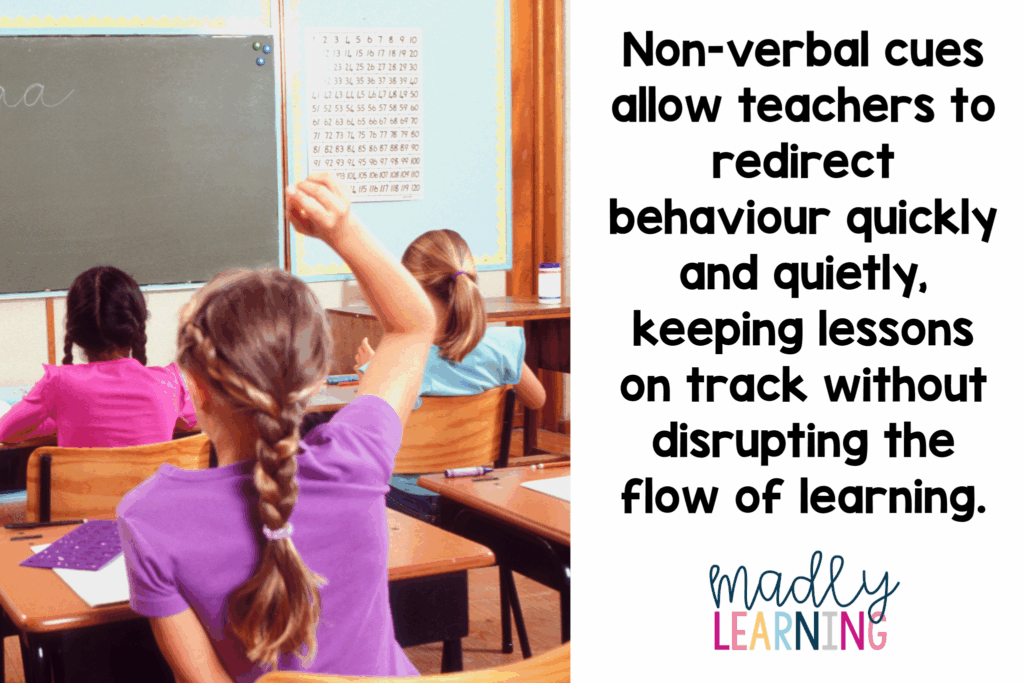
Sometimes the most effective classroom management techniques are the quietest ones. Non-verbal cues like hand signals, proximity, or even a gentle tap on a desk can redirect behaviour without interrupting the flow of your lesson. Establish a few universal signals for common issues, such as needing a bathroom break or settling down. Over time, these cues become second nature to students and allow you to manage behaviour while keeping the focus on learning.
9. Promote Student Leadership
When students feel ownership in the classroom, they are more likely to respect the rules and routines. Assign classroom jobs like line leader, board cleaner, or technology helper. Rotate these responsibilities so every student has the chance to contribute. Beyond jobs, you can also give students opportunities to lead discussions, share their work, or mentor peers. Promoting leadership not only empowers students but also reduces off-task behaviour because they feel invested in the success of the class.
10. Encourage Positive Behaviour With the Kudos Club
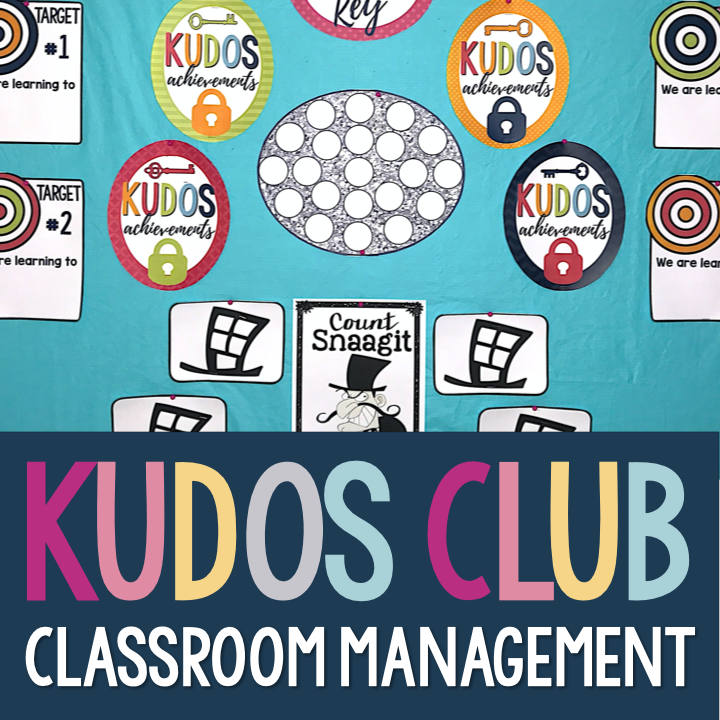
One of the most engaging systems for classroom management is the Kudos Club. This ready-to-use resource is designed to motivate students through positive recognition. When students demonstrate responsibility, kindness, or effort, they earn kudos that can be celebrated in fun and meaningful ways. The Kudos Club helps create a classroom community where good choices are noticed and celebrated. It’s simple to set up, easy to maintain, and proven to make a big difference in student behaviour.
Putting These Classroom Management Ideas Into Action
Effective classroom management is less about control and more about creating a supportive environment where students can thrive. By combining clear expectations, positive reinforcement, and engaging strategies, you can build a classroom that runs smoothly and encourages student growth. Whether you try flexible seating, leadership roles, or a reward system like the Kudos Club, these classroom management ideas can help you create a learning space that works for both you and your students.
More Classroom Management Ideas
Want even more strategies you can use right away? Check out our classroom management podcast playlist on YouTube, where we dive deeper into tips, real-life examples, and teacher-tested solutions.