


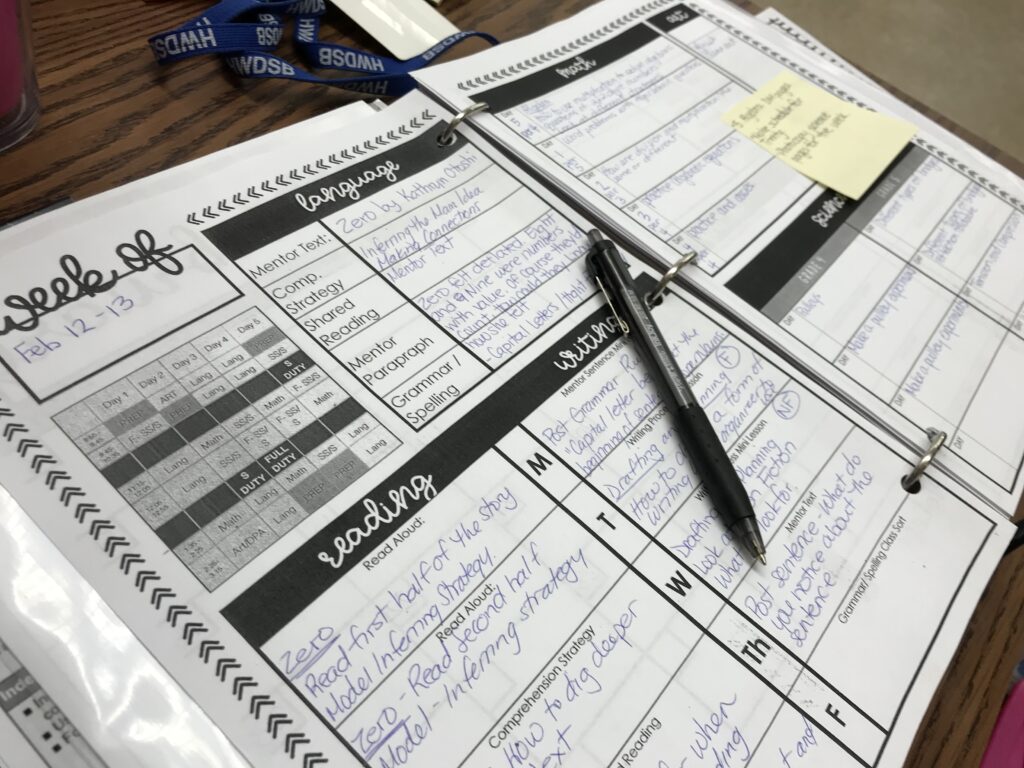
In all my years of teaching, the layout, style, and design of my teacher planner has been something I’ve constantly changed and adapted.
When I first started teaching, I just used what everyone else used — a one-page daily outline with enough room to write detailed lesson plans. I think I even made it in Microsoft Word. There may or may not have been some Comic Sans mixed in. (I know, the horror.)
The problem? I was spending hours planning every single night.
As I continued to teach, I discovered Planboard/Chalk/Idoceo and became an early adopter of this digital planner. For a long time, it was exactly what I needed. I loved being able to move lessons around, plan by subject, and view everything from multiple angles. I still genuinely love this tool for digital planning — but when I returned to work after having kids, planning digitally just wasn’t working anymore.
What I started to notice was that I would plan everything out and then never look at it again. I was still putting in the time to plan, but I’d teach day-to-day without referring to it. Eventually, I just stopped really planning at all… and well, that caught up to me.
It wasn’t pretty.
So back to a paper planner I went.
I wanted to try all the adorable planners I kept seeing on Instagram — you know the ones, with all the flair pens and stickers. I ordered an Erin Condren planner with the best of intentions to make mine look just as cute. I kept it up for exactly two weeks before real life hit and I realized that decorating my planner was eating into my already limited time.
Still convinced I could make the cute planner work if I just tried harder, I switched to a Happy Planner. Another two weeks later, the dream of an Instagram-worthy planner full of stickers and flourishes fizzled out again.
But here’s what I loved about the Happy Planner: the functionality of the spiral binding. I could flip it around like a notebook — a binder just couldn’t compare.
Then it hit me: if I bought a Happy Planner hole punch, I could recreate that same functionality with planner pages I designed myself.
Why My Teacher Planner Helps Me Plan by the Week (Not the Day)
Here’s something I’ve learned the hard way: planning one day at a time is a trap.
When you plan day-by-day, you’re constantly in reactive mode. You finish teaching Monday, go home exhausted, and then sit down to figure out Tuesday. Rinse and repeat. Every. Single. Night. It’s the fastest road to burnout I know — and I’ve been on it.
The bigger problem is that daily planning makes your lessons feel disconnected. Monday’s lesson doesn’t naturally lead into Tuesday’s. You lose sight of where you’re heading and what you’re building toward. Before long, you’re just filling time instead of teaching toward your long-term goals and curriculum expectations.
When I shifted to planning a full week at a time, three things changed:
1. I could finally see the bigger picture. Suddenly I could see how my lessons connected to one another, how concepts built across the week, and how everything tied back to the bigger curriculum goals I was working toward.
2. I felt prepared instead of panicked. I do my planning on Friday afternoons for the following week. That single shift — closing out my week with next week already mapped out — means I walk into Monday morning knowing exactly where I’m going. No Sunday-night scramble. No frantic morning prep.
3. It actually saved me time. This one surprised me. I thought planning a whole week would take longer than planning a day, but the opposite turned out to be true. When you’re already in “planning mode,” it’s faster to map out five connected days than it is to start from scratch five separate times.
Why This Teacher Planner Matters Most for Language
Weekly planning has been a game-changer for my language program in particular. Language isn’t a subject you can plan in isolated daily chunks — it’s a web of connected pieces. In any given week, I’m balancing whole-group mini-lessons, small-group instruction, and independent work, and all of those pieces need to talk to each other.
When I can see the whole week laid out, I can intentionally plan how my whole-group lesson on Monday flows into the small-group work I’ll do Tuesday and Wednesday, and how that connects to the independent task students will tackle by Thursday or Friday. I can make sure every student is getting time with me in small groups while still having meaningful, connected work to do when they’re not. That kind of intentional balance is almost impossible to plan one day at a time.
The Before and After
I’ll be honest about what changed when I made this shift.
Before weekly planning, my Sunday nights were dread. I’d put off planning all weekend, then panic-plan late into the evening. Weeknights weren’t much better — I’d come home drained and immediately start planning the next day. My weekends never felt like weekends. I was always either planning or feeling guilty about not planning.
After switching to weekly planning, Friday afternoon became my reset. Thirty to sixty minutes of focused planning, and my entire next week was mapped out before I even left the school building. My weekends became actual weekends. My evenings opened up. And I walked into every Monday morning calm and ready instead of frantic and behind.
That’s why I knew I needed a planning page that let me see a full week at a time — a page where I could plan my whole language program together and see my week as one connected picture.
So that’s when I created my weekly planning page.
If you want this planner in an editable version sign up below and we will send it to you for free.